Looking for a neighborhood that feels tucked away without cutting you off from Dallas? That is exactly why Bluffview, Briarwood, and Devonshire keep showing up on buyers’ short lists. If you want mature trees, architectural character, and quick access to everyday favorites, this close-in cluster offers a rare balance of privacy and convenience. Let’s dive in.
Why this area stands out
Bluffview, Briarwood, and Devonshire are best understood as adjacent pockets with overlapping identity, not one rigidly defined subdivision. Local boundaries can vary depending on the source, which is why many Dallas residents talk about them as a connected neighborhood cluster rather than as hard-edged, totally separate areas. D Magazine’s neighborhood guide reflects that shared identity, while the City of Dallas neighborhood map shows distinct neighborhood organizations.
For you as a buyer or seller, that matters because the appeal is often bigger than a single set of boundary lines. The draw is the overall lifestyle: winding streets, established homes, large trees, and a location that keeps you close to major Dallas destinations.
Bluffview’s quiet prestige
Bluffview has one of the most distinctive physical settings in Dallas. The neighborhood began as a 215-acre dairy farm in the 1920s, and when it was developed, the land was divided into one-acre lots while preserving much of the natural landscape. According to D Home’s look at Bluffview, that history helps explain the curved roads, irregular lots, mature trees, and creek corridors that still define the area today.
That landscape is a major part of the luxury here. Instead of a uniform streetscape, you find variety, privacy, and homes that respond to the land. It is a setting that has long attracted both preservation-minded owners and modern architects, which gives Bluffview a layered, highly individual feel.
Briarwood’s smaller-scale charm
Briarwood offers a different but related experience. Developed in the late 1930s on the former Bluffview Dairy site, it reads as a smaller, tree-filled pocket with a mix of bungalows, cottages, Tudors, and newer homes, according to the Briarwood Crime Watch neighborhood overview.
If you like the idea of a neighborhood that feels established and close-knit, Briarwood tends to deliver that sense of scale. Its boundaries are commonly described as Lovers Lane to the south, Inwood to the east, Horseshoe Trail and Briarwood Place to the north, and Elsby Avenue to the west, though neighborhood naming can vary by source.
Devonshire’s classic pocket feel
Devonshire sits just west of the Dallas North Tollway and east of Bluffview, creating another compact, close-in option with strong neighborhood identity. The City of Dallas map places it between Northwest Highway, Lovers Lane, the Tollway, and Inwood Road, while People Newspapers’ Devonshire guide describes it as a small pocket with a convenient location.
Housing here includes original 1940s one-story stone cottages, two-story Tudors, and later luxury new construction. Some streets still reflect an older pattern, including areas where sidewalks are limited, which adds to Devonshire’s pocket-neighborhood character.
Homes with character, not cookie-cutter sameness
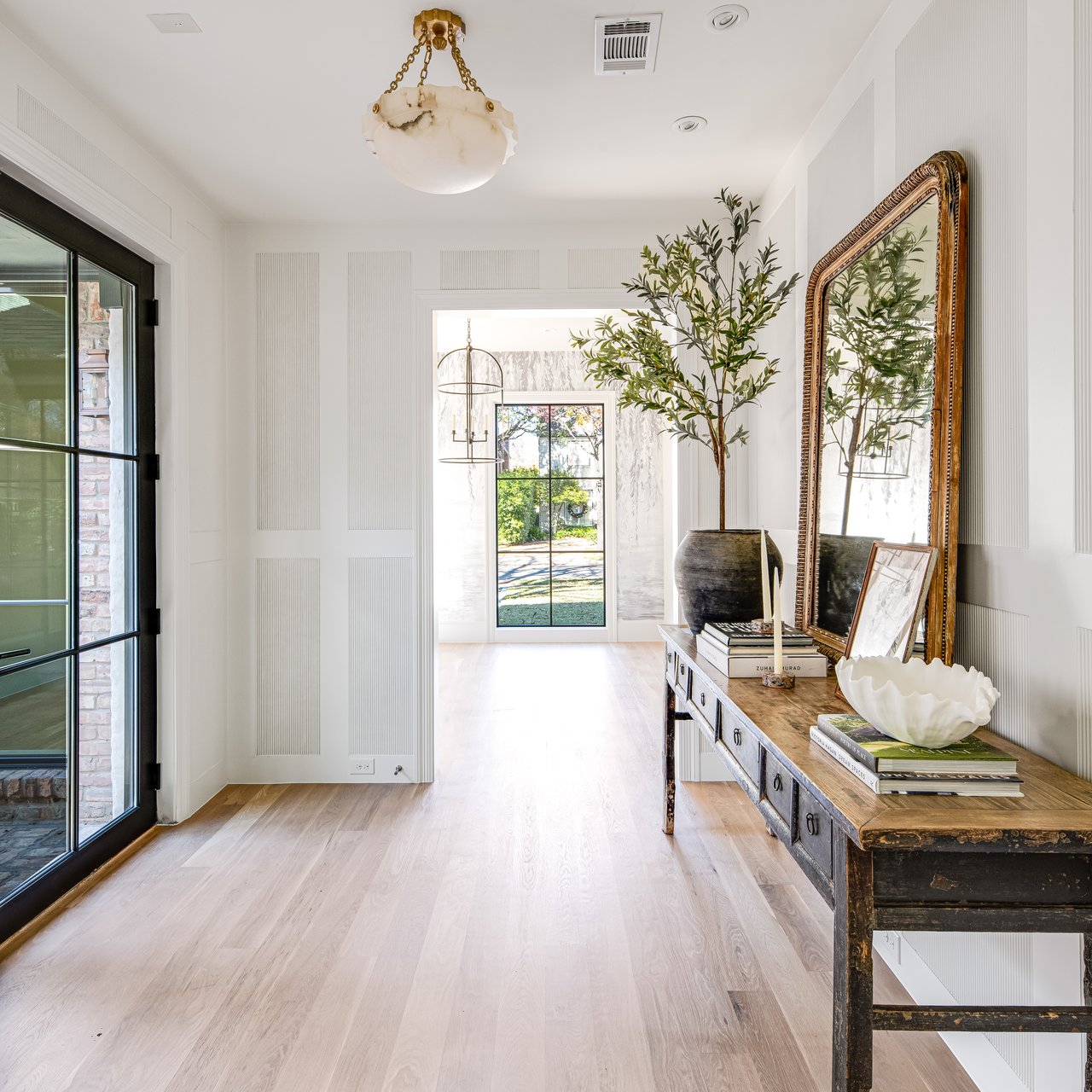
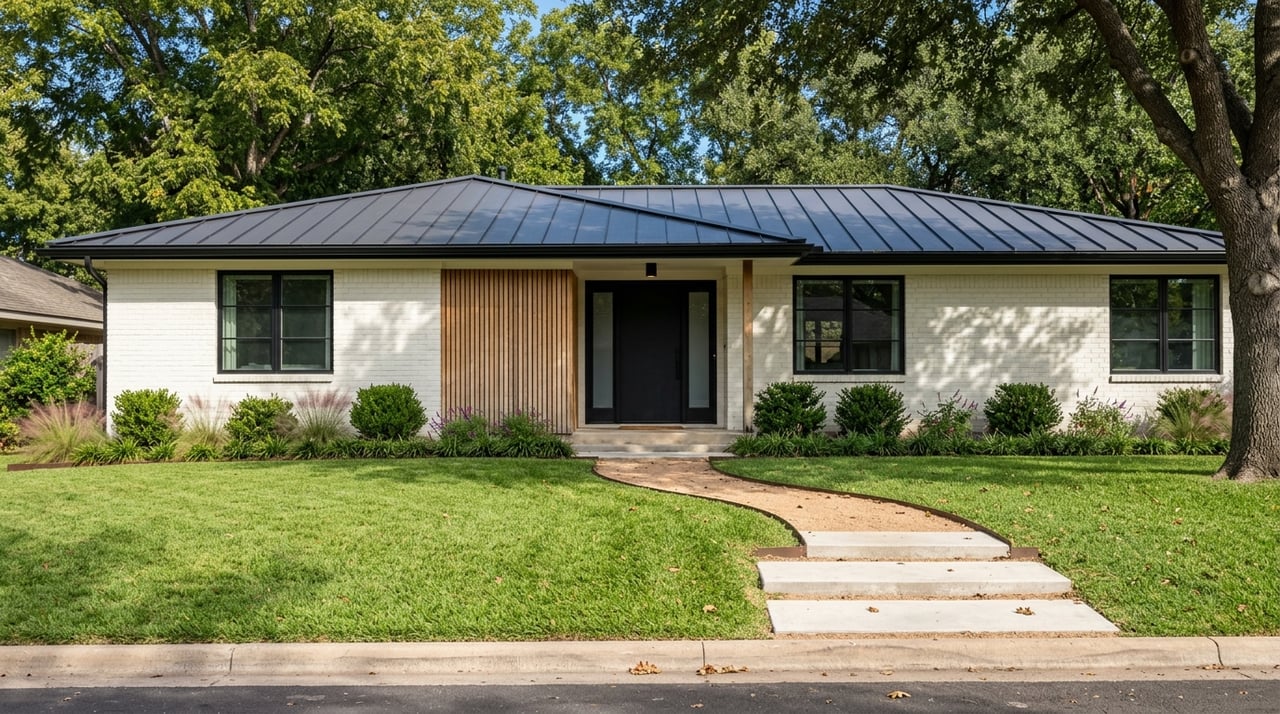
One of the biggest reasons this area stands out is the housing mix. Across the three neighborhoods, you are more likely to see architectural variety, lot size, and tree canopy shaping value than a predictable run of lookalike homes. That can include cottages, Tudors, midcentury homes, renovated properties, and custom new builds, as noted by D Magazine.
For buyers, that means more personality and more choices in style. For sellers, it creates an opportunity to market a property around setting, privacy, land, and architectural appeal rather than trying to fit into a standardized neighborhood formula.
Everyday convenience near home
Quiet luxury only works when daily life is easy, and this area checks that box. The main retail and dining energy is centered around Lovers Lane, Inwood Village, and the Pavilion on Lovers Lane. Inwood Village describes itself as an independent shopping center that has served Dallas since 1945, with local restaurants, boutiques, and a theater.
That convenience matters because you are not choosing between a tucked-away residential setting and practical access. People Newspapers also highlights nearby daily-use destinations, and Briarwood’s neighborhood group notes that many residents walk to Lovers Lane shops and restaurants.
Community life feels active and invested
These neighborhoods are not just pretty on a map. They also have active neighborhood organizations that help support connection and upkeep. Devonshire’s association helps fund security and events, Briarwood Crime Watch uses block captains and focuses on safety communication, and Bluffview has both a garden club and a neighborhood patrol organization, according to People Newspapers and the city neighborhood resources.
For you, that can translate to a stronger sense of neighborhood involvement. It is one more reason the area feels established rather than anonymous.
Central access without an urban feel
This is where the phrase “near the action” really fits. Bluffview, Briarwood, and Devonshire give you a residential setting with strong central access to major Dallas routes and destinations. Dallas Love Field notes that the airport sits in the heart of Dallas and is close to I-35, the Dallas North Tollway, and US-75.
That accessibility supports the everyday appeal of the area. D Magazine describes Bluffview as a short commute from downtown, and People Newspapers notes that downtown is about a 10-minute drive from the Tollway. You get proximity without giving up the calmer pace of a residential neighborhood.
What buyers should verify by address
Because boundaries and neighborhood labels can shift, it is smart to confirm details on any specific property before you rely on a listing description. School assignment is one of the clearest examples. Dallas ISD explains that attendance zones are based on factors like school locations, capacities, home addresses, and natural boundaries, and its SchoolSite Locator can be used to verify assignments by exact address.
It is also wise to confirm lot dimensions and any neighborhood-association or patrol coverage property by property. In an area where identity is shaped by overlapping local definitions, address-level verification gives you the clearest picture.
Why sellers benefit here
For sellers, this neighborhood cluster offers a compelling story when the home is marketed correctly. Properties here often stand out because of their land, trees, architectural detail, and close-in location. Those are features that benefit from thoughtful preparation, polished presentation, and a marketing strategy that knows how to tell the neighborhood story.
That is especially important in areas like Bluffview, Briarwood, and Devonshire, where no two homes present exactly the same way. A tailored launch can help buyers understand not just what the home is, but why the setting is so hard to duplicate.
Why buyers keep returning here
For buyers, the appeal is straightforward. You get room to breathe, homes with personality, and quick access to many of the places you use every week. If you are searching for a close-in Dallas address that feels quieter and more established than a denser urban setting, this cluster continues to make a strong case.
Whether you are drawn to Bluffview’s dramatic landscape, Briarwood’s intimate scale, or Devonshire’s classic pocket feel, the common thread is clear: these neighborhoods offer a refined residential experience close to the center of Dallas.
If you are considering a move in this part of Dallas, working with a team that understands the nuances of close-in neighborhood identity, property positioning, and presentation can make a real difference. To explore opportunities or discuss your home’s value, connect with The Rosen Group.
FAQs
Are Bluffview, Briarwood, and Devonshire the same neighborhood?
- Not exactly. They are usually discussed as a close-in Dallas neighborhood cluster, but boundaries and naming can vary by source and neighborhood association.
What types of homes are common in Bluffview, Briarwood, and Devonshire?
- You can expect a mix of cottages, Tudors, midcentury homes, renovated properties, and custom new construction, with lot size and mature trees playing a major role in the overall appeal.
How close are Bluffview, Briarwood, and Devonshire to downtown Dallas?
- This area offers strong central access. Sources in the research report describe Bluffview as a short commute from downtown, and Devonshire as roughly a 10-minute drive from the Tollway to downtown.
What shopping and dining are near Bluffview, Briarwood, and Devonshire?
- Everyday convenience is centered around Lovers Lane, Inwood Village, and the Pavilion on Lovers Lane, with restaurants, boutiques, and other daily-use stops nearby.
How should buyers verify school assignment in Bluffview, Briarwood, or Devonshire?
- School assignment should be checked by exact property address using Dallas ISD’s SchoolSite Locator, since attendance zones are based on address and other district factors rather than neighborhood nickname alone.